
Wildlife
Frogs of Sarapiquí, Costa Rica
By the naturalist guides of Costa Rica Best Chocolate · Updated November 2026
Quick answer
The lowland rainforest of Sarapiquí is home to dozens of frog species. The best known are the strawberry poison dart frog, seen by day in the leaf litter, and the red-eyed tree frog, which comes out at night near water. Glass frogs, the green-and-black poison dart frog and the hourglass tree frog are also common.
Strawberry poison dart frog
Oophaga pumilio is the small red frog with blue legs that locals call “blue jeans”. It is only about two centimeters long, calls with a buzzing chirp and carries its tadpoles on its back to tiny pools of water in plants.
When and where By day, on the forest floor and in the leaf litter.
Green-and-black poison dart frog
Dendrobates auratus shines with bright green and black patterns. Like other poison dart frogs, its colors warn predators that its skin is toxic, so it moves around in daylight without hiding.
When and where By day, among roots and fallen logs, more active after rain.
Red-eyed tree frog
Agalychnis callidryas is the green frog with red eyes, blue-striped sides and orange feet, a symbol of Costa Rica. It sleeps under leaves by day and lays its eggs on leaves over water, so the tadpoles drop straight into the pond when they hatch.
When and where At night, on leaves and branches around ponds, especially in the rainy months.
See the tourFrog TourGlass frogs
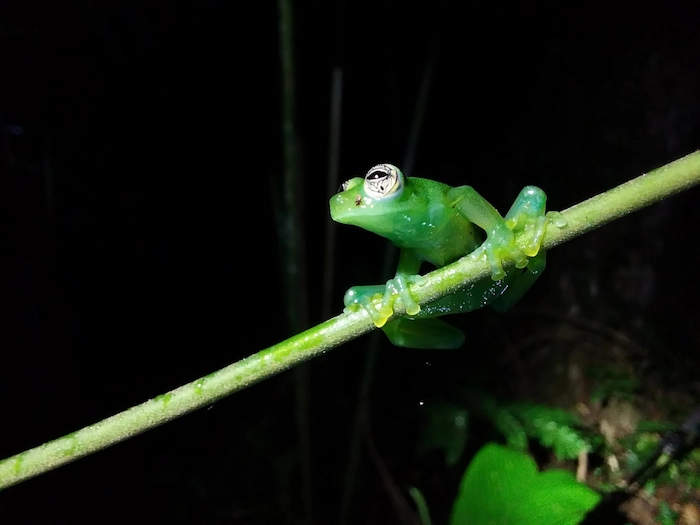
Glass frogs are small, lime-green frogs with a see-through belly: from below you can see their heart and organs. Males guard their egg clutches on leaves hanging over streams.
When and where At night, on leaves above streams; listen for their high, short calls.
See the tourNight WalkHourglass tree frog
Dendropsophus ebraccatus is a small yellow frog with a brown, hourglass-shaped pattern on its back. After heavy rain, large groups gather to call around ponds and flooded grass.
When and where At night after rain, around ponds and wet clearings.
Smoky jungle frog
Leptodactylus savagei is one of the largest frogs in Costa Rica, brown and heavy-bodied, with a deep call. It hunts insects and even small animals on the forest floor.
When and where At night, on the ground near streams and burrows.
How to see frogs responsibly
A few simple rules protect the frogs and make your night walk better:
- Go out after rain, when frogs are most active.
- Walk slowly and listen: calls lead you to the frogs.
- Never touch or pick up a frog.
- Keep your light off their eyes and avoid flash photos.
- Stay on the trail to protect eggs and tadpoles.
See it with a local guide
Our tours in Sarapiquí
Five two-hour tours in our reserve in Chilamate, from $40 per adult.
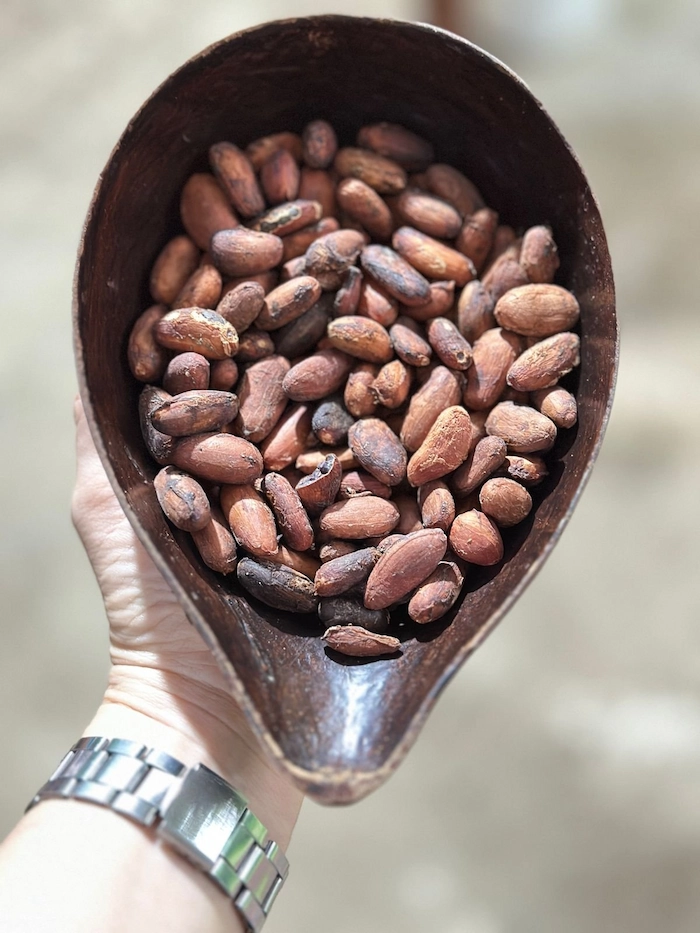
Chocolate Tour
8:00 AM · 10:00 AM · 1:00 PM · 3:00 PM
$40 per adult
Children 4 to 11: $28 · under 4: free
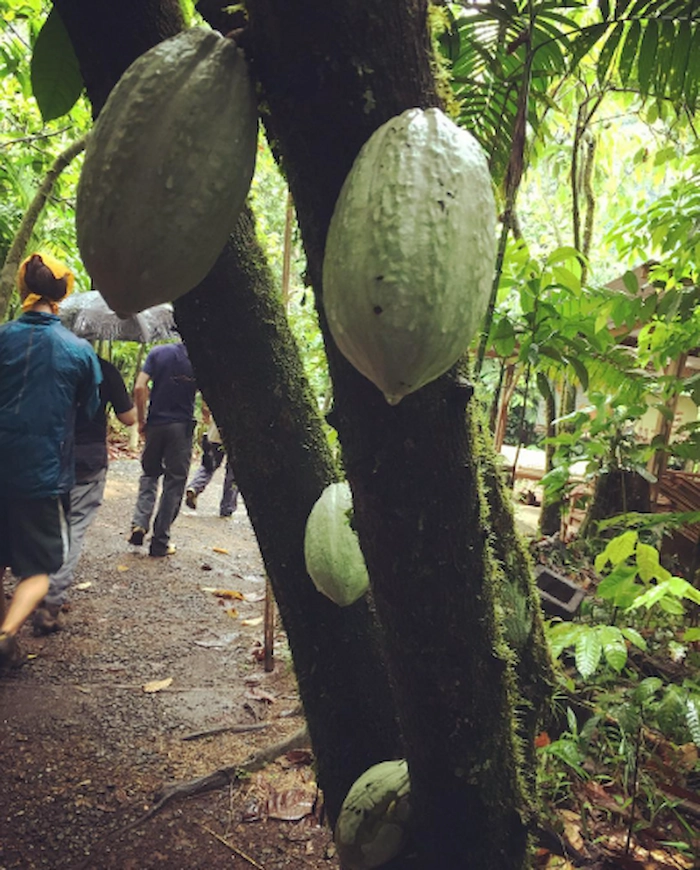
Nature History Walk
8:00 AM · 10:00 AM · 1:00 PM · 3:00 PM
$40 per adult
Children 4 to 11: $28 · under 4: free

Frequently asked questions
Everything about your visit
Can’t find your question? Write to us in English or Spanish.
Contact usTheir skin carries toxins, but they are only a risk if you handle them. Look without touching and you can enjoy them safely.
Most frogs are active at night, especially after rain. Poison dart frogs are the exception: you see them by day on the forest floor.
Yes. It lives in the lowland rainforest of Sarapiquí and comes out at night near ponds and wet areas, especially in the rainy months. Sightings are never guaranteed, because they are wild.
It is not required, but a local guide knows where each species lives, recognizes their calls and helps you see them without disturbing them. Our Frog Tour runs in two-hour turns between 5:00 and 10:00 PM.

Sarapiquí · Costa Rica
Taste the story of cacao in the rainforest
Choose a tour and a time, and write to us to book. We answer in English and Spanish.
4.9 out of 5 on Google · 500+ reviews
Loading secure checkout